Experiential marketing is a strategy where a brand creates a live, in-person experience — something people can taste, touch, play with, and photograph — instead of (or alongside) ads they scroll past. When someone samples your product, interacts with your booth, or posts a photo of a branded moment, they form a memory tied to your brand that no banner ad can match.
At Lalu Fun Foods, we've spent 12+ years and 1,000+ events producing exactly this kind of work in Toronto, using food and beverage as the medium — for brands like NYX Cosmetics, Sephora, and Fidelity Investments, and at residencies like the CNE. This guide explains the term, shows what it looks like in practice, and covers the honest numbers.
Experiential marketing vs. traditional advertising
- Memory: people remember what they taste, smell, and touch. A branded drink in someone's hand becomes a memory tied to your brand.
- Participation instead of interruption: an ad interrupts what someone was doing; an experience is the thing they choose to do.
- Organic reach: a photogenic branded moment gets posted and tagged by guests, multiplying impressions with no extra ad spend.
- Sampling converts: when people try a product in person, the experience does the persuading for you.
What is a brand activation?
A brand activation is a single experiential campaign — the specific pop-up, booth, lobby takeover, or festival residency where the brand 'activates' in front of an audience. Experiential marketing is the strategy; the brand activation is the event itself. Most brands run their first activation as a one-day pop-up, then scale into recurring programs once they see the engagement.
What experiential marketing looks like in Toronto
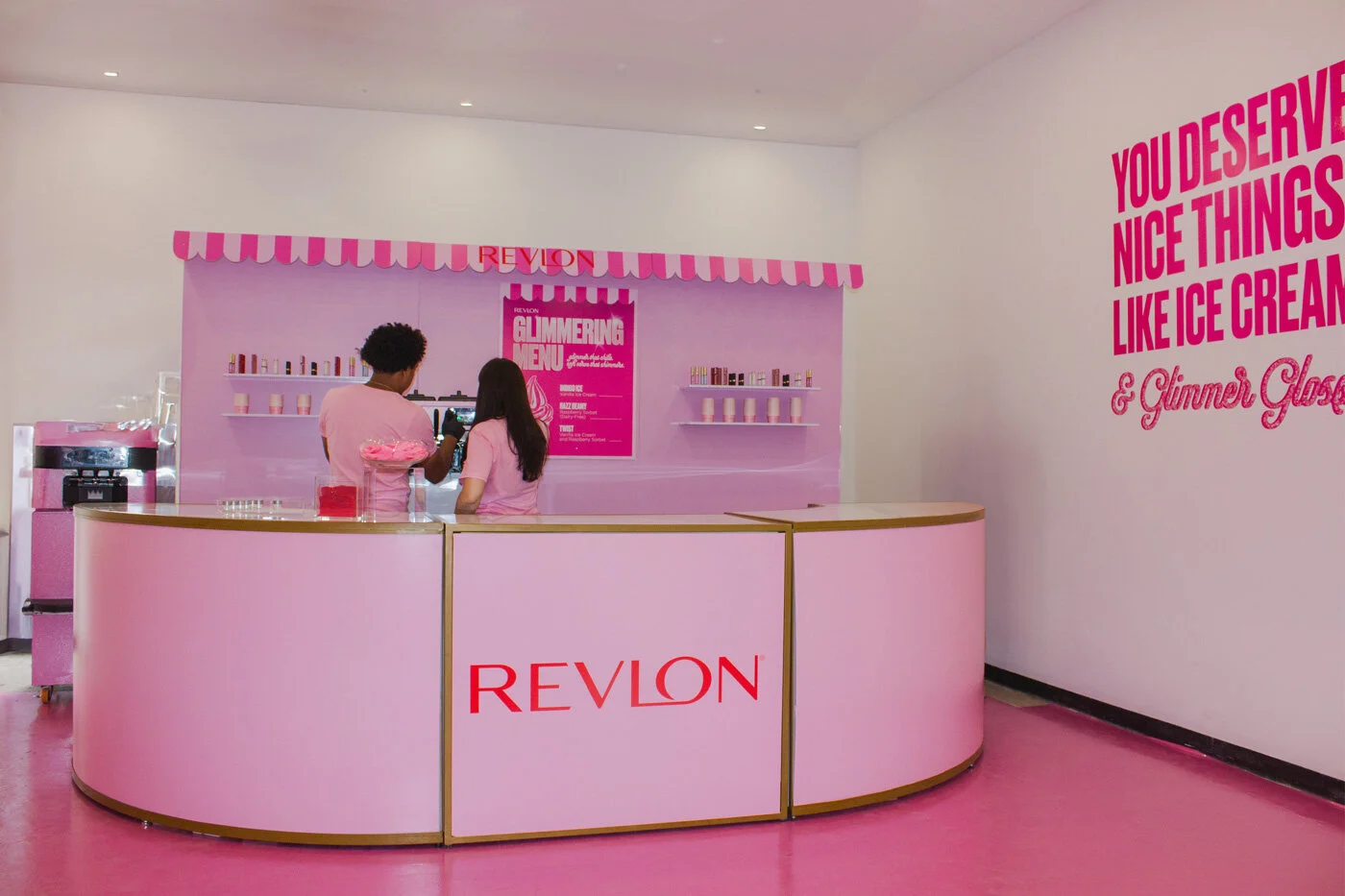
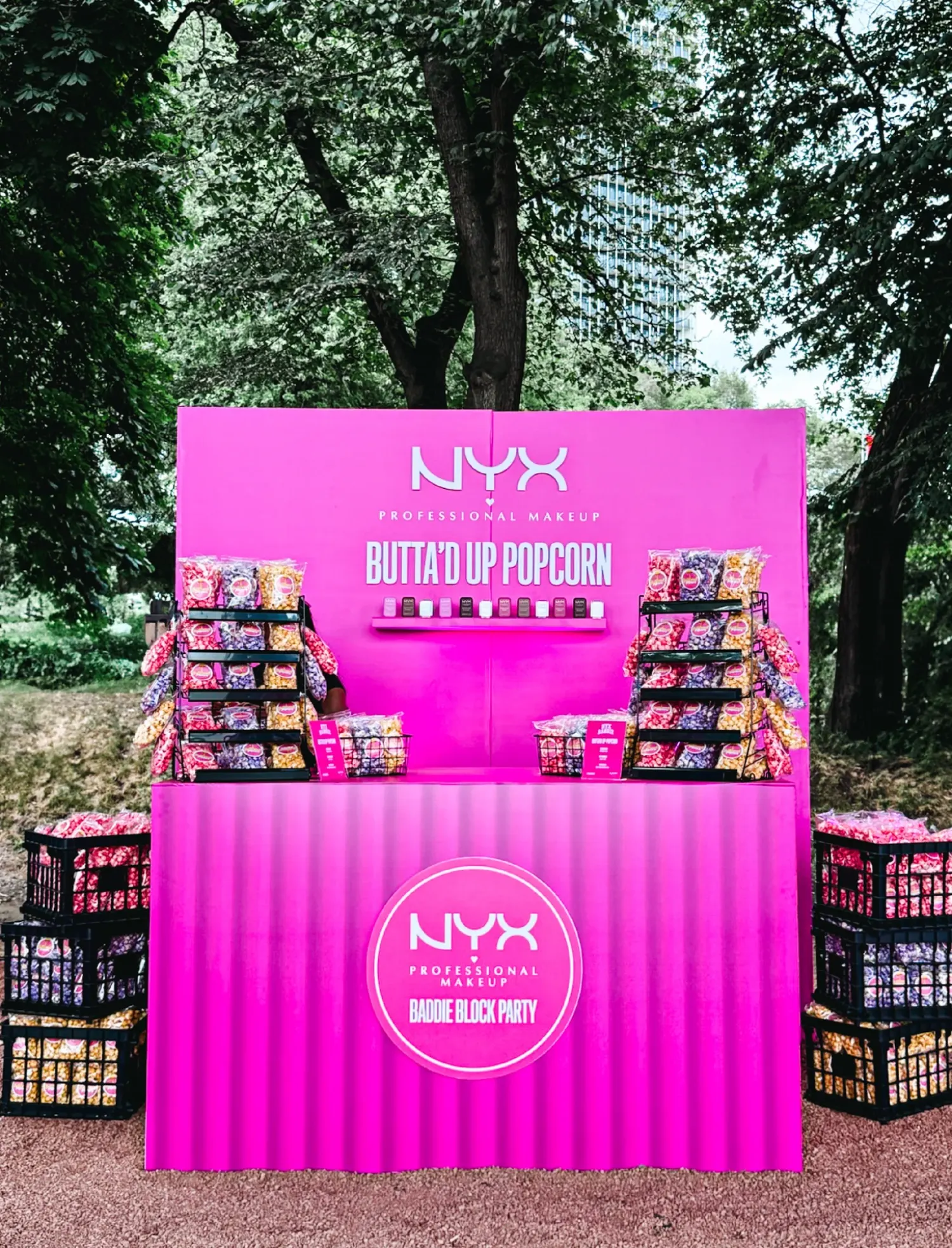
- A cosmetics pop-up tour: for NYX Cosmetics, custom drinks shade-matched to the product line, served from a fully branded station as the campaign toured.
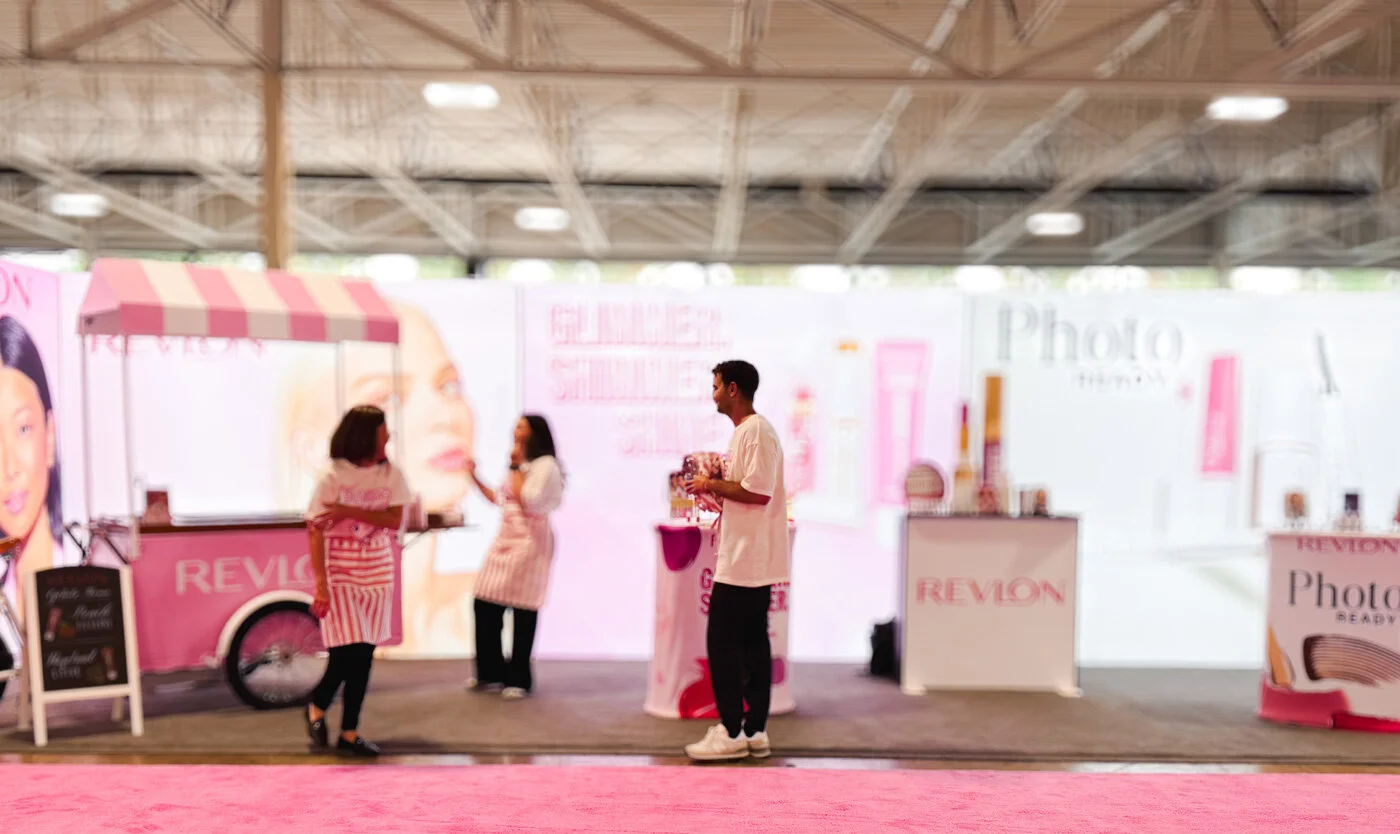
- A retail brand takeover: for Sephora, a fully branded gelato cart — cart, cups, and flavors all styled to the campaign.
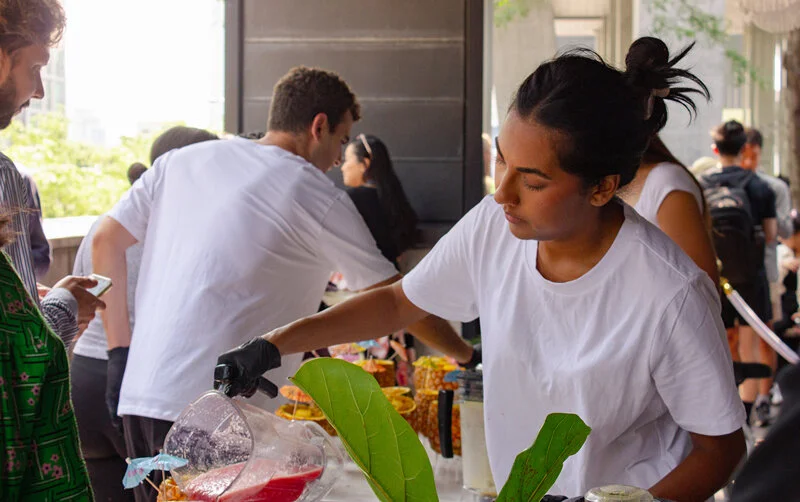
- A corporate lobby takeover: for Fidelity Investments, a branded smoothie and coconut bar that served 1,000 employees in a single day in their downtown Toronto office lobby.
- A festival residency: an 18-day branded food program at the CNE, one of the highest-traffic event audiences in the country.
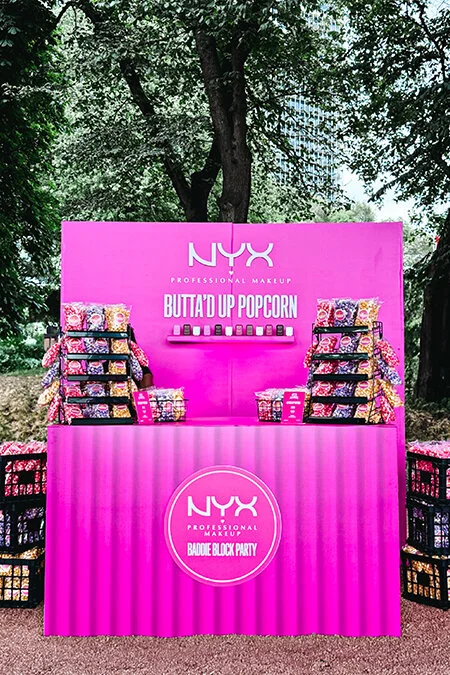
Why food and beverage is the strongest experiential medium
Every activation needs a reason for people to stop, stay, and share. Food does all three at once: it's multi-sensory, it's universal — everyone at the event eats — and every surface of it is brandable. Custom cups, packaging, signage, and the cart itself become moving billboards, and a visually striking serve is photographed without anyone asking.
How much does experiential marketing cost in Toronto?
At Lalu, activations start at a $1,500 minimum spend, which covers setup, staffing, service, and customization — typically a compact branded station for 100–200 guests. From there, programs scale with guest count, duration, and how custom the build gets: our intake budget bands run from $1,500–$3,000 for compact single-station activations up to $50,000+ for full multi-activation programs with custom fabrication. Send a brief and we reply the same business day with concept direction and pricing.
How to plan your first activation
- Pick a product moment that's instantly shareable — visually strong, easy to hold, easy to photograph.
- Brand every surface: cups, packaging, signage, and the cart or station itself.
- Design the photo moment — a styled backdrop or statement prop gives guests a reason to post.
- Go where your audience already is: festivals, trade shows, retail pop-ups, or your own office lobby.
- Book 3–4 weeks ahead for a turnkey activation; larger custom builds and multi-day festival residencies need 6–8 weeks.
Experiential marketing FAQ
What's the difference between experiential marketing and a brand activation?
Experiential marketing is the overall strategy of marketing through live experiences. A brand activation is one campaign within that strategy — the specific pop-up, booth, or event where it happens.
How far in advance should a Toronto activation be booked?
Ideal lead time is 3–4 weeks for turnkey activations. Larger custom builds and multi-day festival residencies should be booked 6–8 weeks out. Rush timelines are handled case-by-case.
Does experiential marketing work for B2B and corporate brands?
Yes — corporate offices, conferences, and trade shows are core experiential formats. Lobby takeovers for employee and tenant engagement (like the Fidelity program above) and branded booth hospitality at trade shows are two of the most-booked corporate versions.
Who handles permits, insurance, and staffing?
A turnkey producer should own all of it. Lalu is food-safety certified and fully insured, provides a Certificate of Insurance (COI) to any venue on request, and delivers every activation with our own uniformed team — setup, service, and teardown included.
Ready to test the channel? Tell us the brand, the audience, and the date — we'll come back the same business day with a concept, a product lineup, and honest pricing.