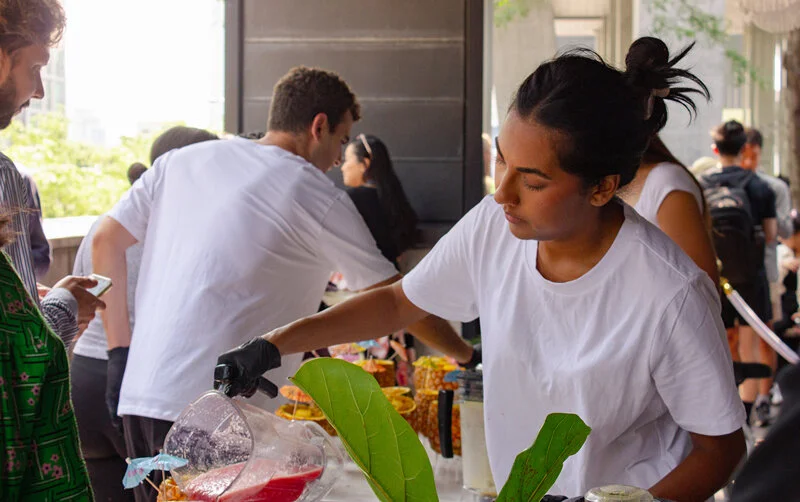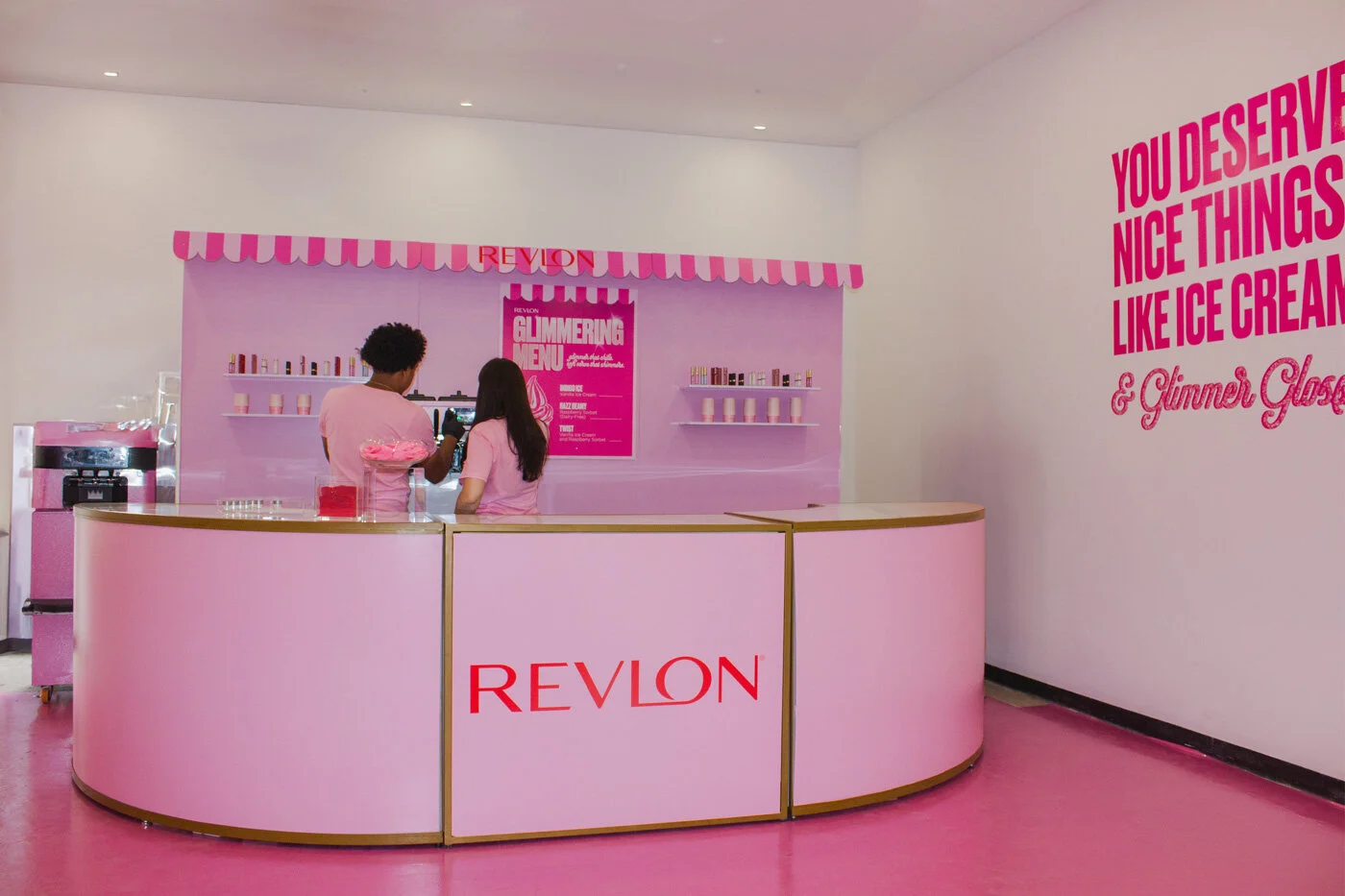
A brand activation is a single live campaign where a brand shows up in person and gives an audience something to taste, touch, or do - a pop-up, a sampling station, a lobby takeover, a festival residency. It's the moment a brand stops talking at people and starts handing them an experience. We're Lalu Fun Foods, a Toronto experiential brand activation agency, and we produce these across the GTA - from downtown Toronto office lobbies to the CNE grounds. This guide breaks down the formats, the math, and the honest numbers.
What is a brand activation?
A brand activation is one experiential campaign: the specific event where a brand 'activates' in front of an audience. If experiential marketing is the strategy, the activation is the thing that actually happens on the day - a branded coconut bar in a Mississauga office, a sampling pop-up at a Vaughan retail launch. It's turnkey when one team owns the build, the product, the staff, and the teardown. Lalu runs every booking that way.
What types of brand activations are there?
Four formats cover most of what brands book in Toronto. Each one puts the brand in a different audience context, and each has its own logistics. The format you pick should follow where your audience already is - a retail crowd, a festival crowd, a captive office crowd, or a curated guest list.
- Pop-up and sampling: a short, high-traffic station where people try the product and walk away with a branded moment. Common for product launches and retail openings; a single compact station runs 100-200 guests.
- Festival residency: a multi-day branded food program inside a festival or event grounds. Lalu has run residencies at the CNE, where we've been one of the top-grossing food vendors, and at the Distillery Winter Village.
- Lobby takeover: a branded station set up in an office or tower lobby for employee or tenant engagement. We've produced these for QuadReal and Brookfield properties, where load-in rules and call times are strict.
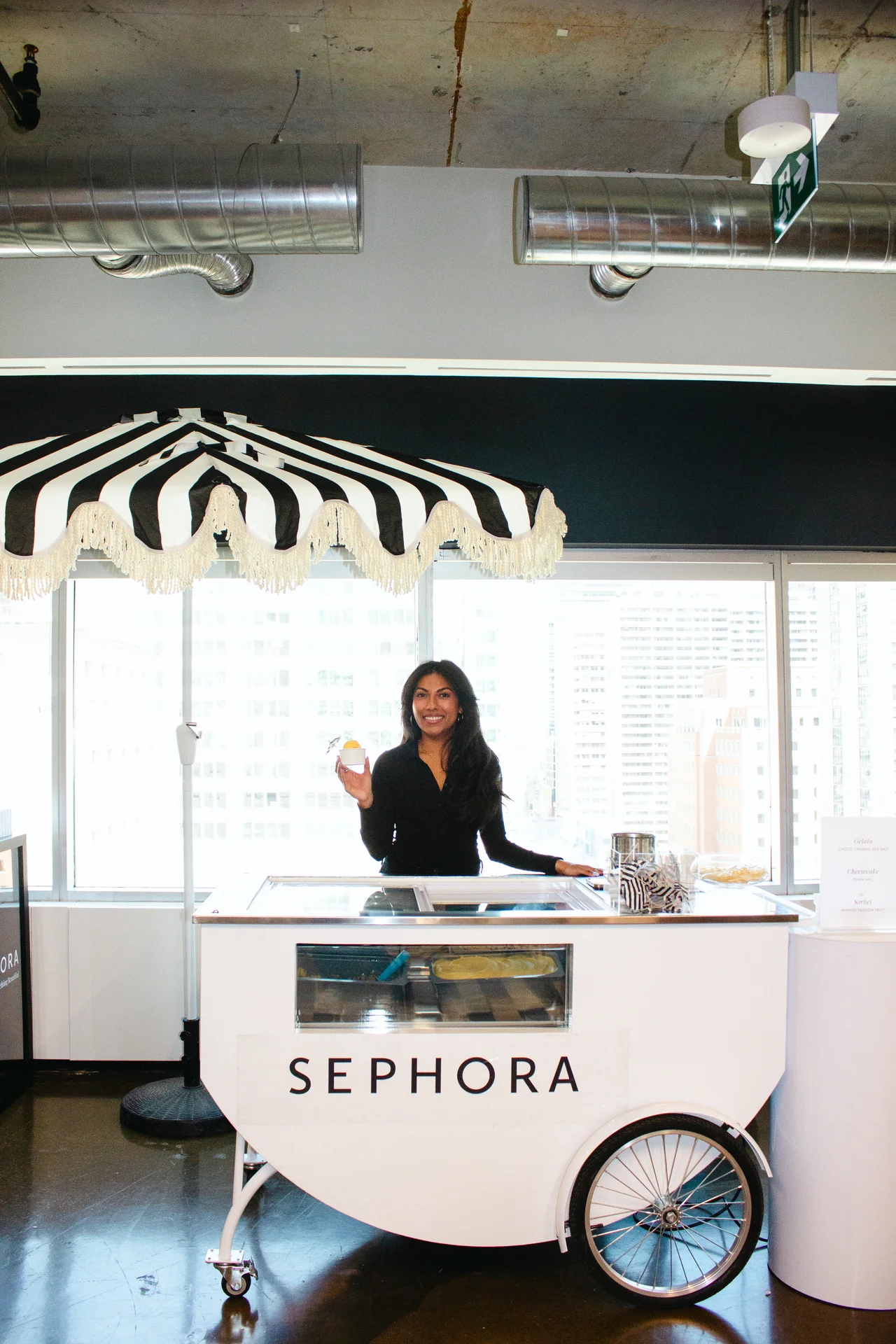
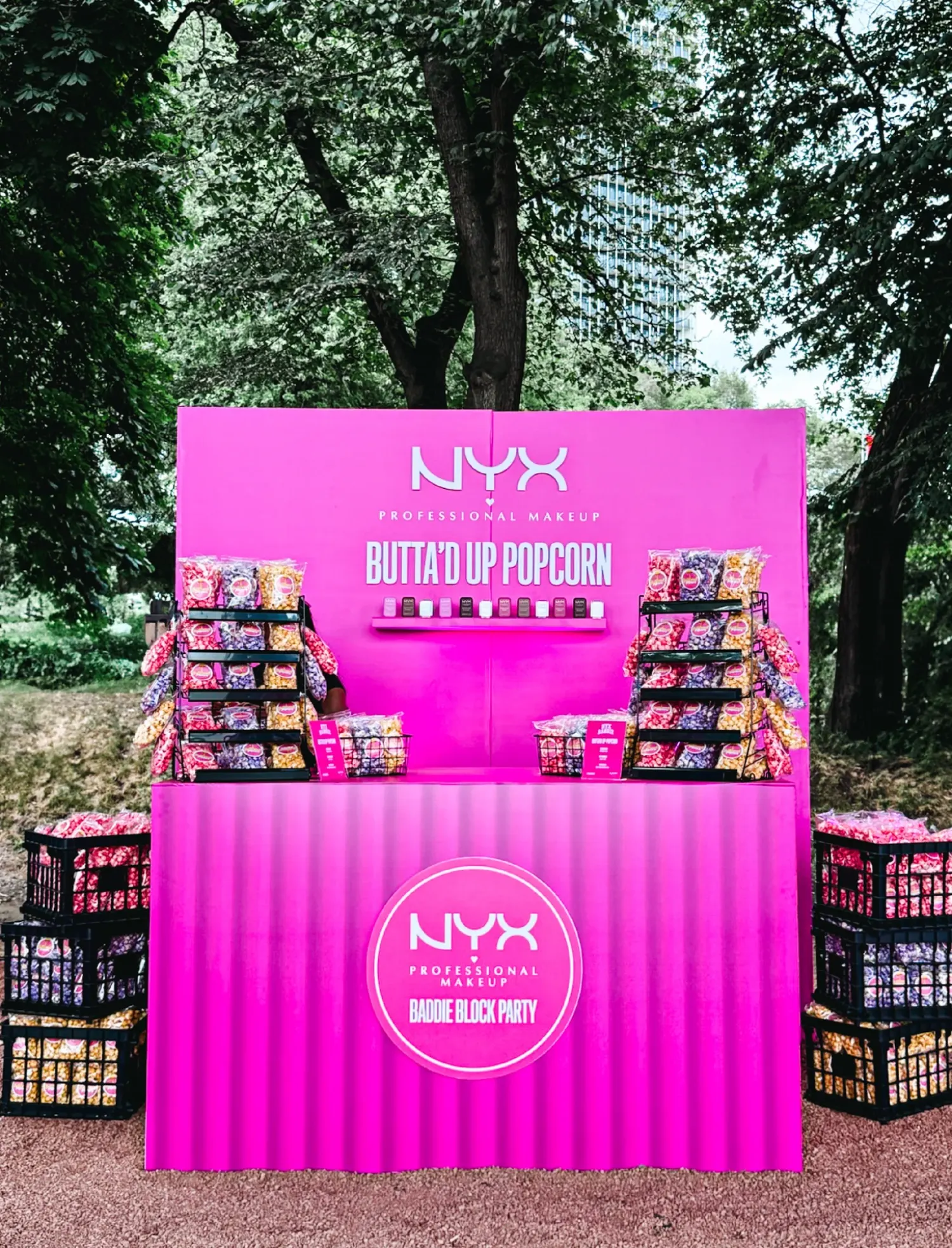
- Retail activation: a branded serve placed inside or outside a store to drive foot traffic and dwell time. We've done retail-styled programs for Sephora and a pop-up tour for NYX Cosmetics.
Why does food and beverage work so well for brand activations?
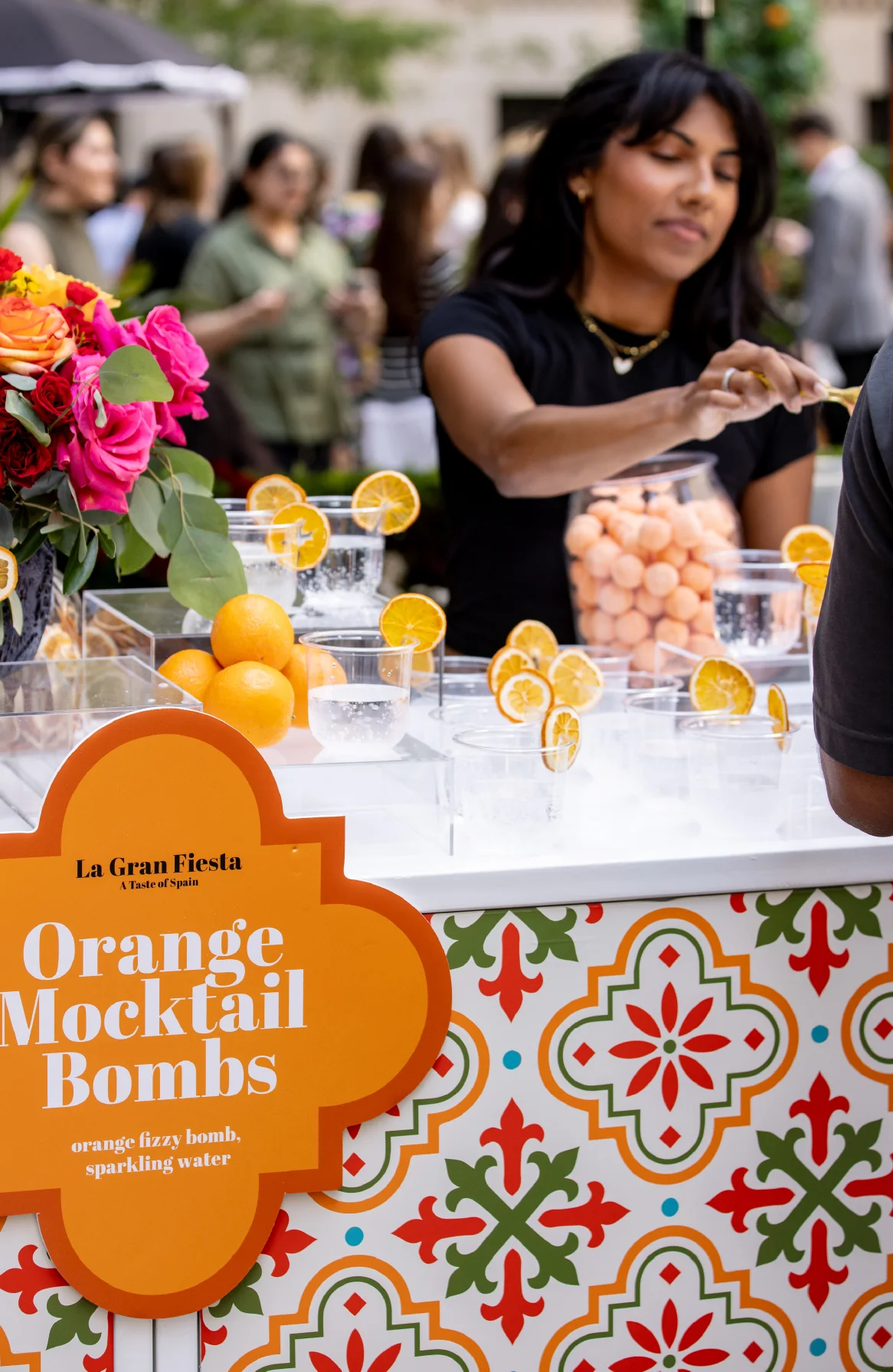
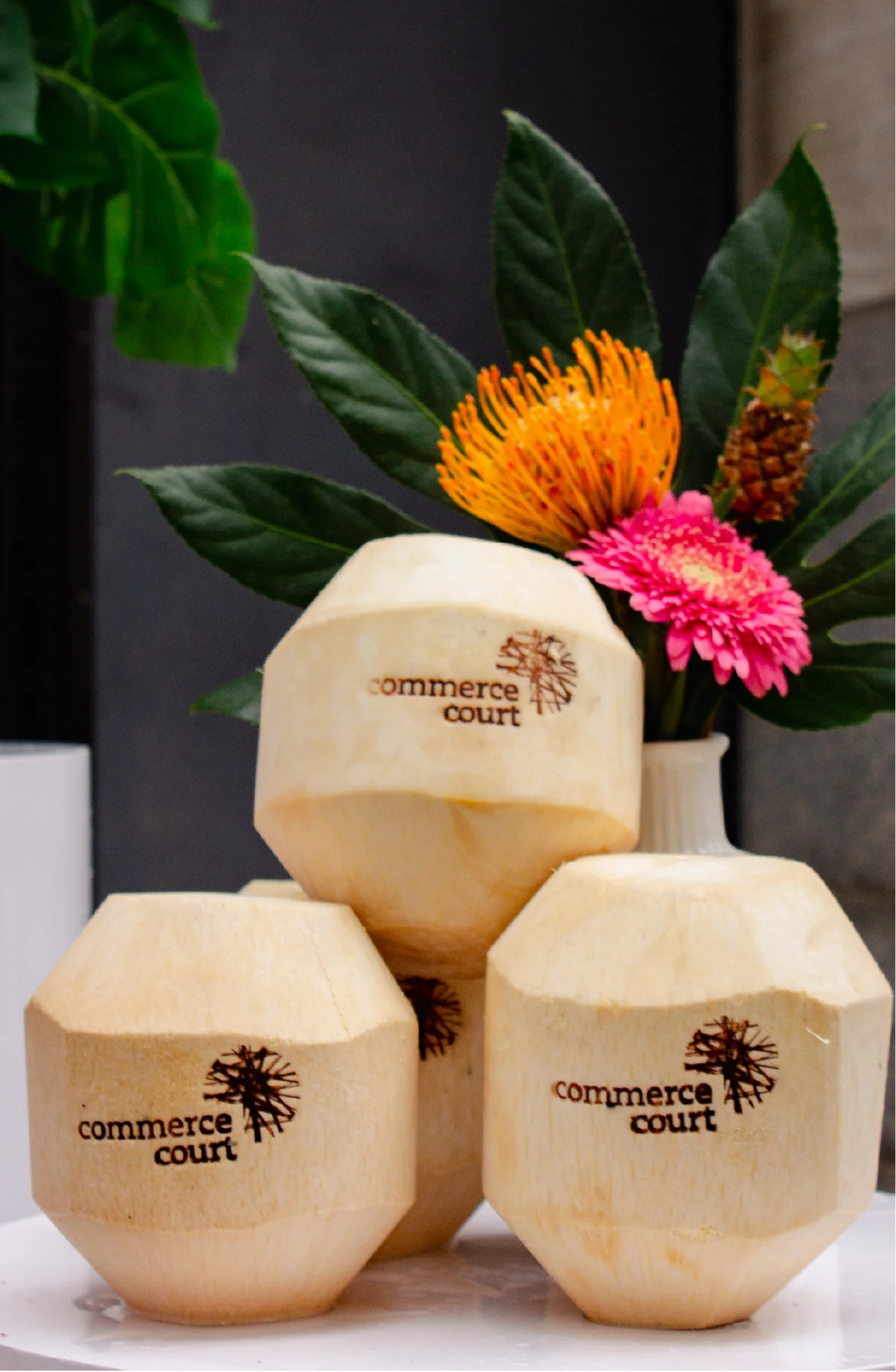
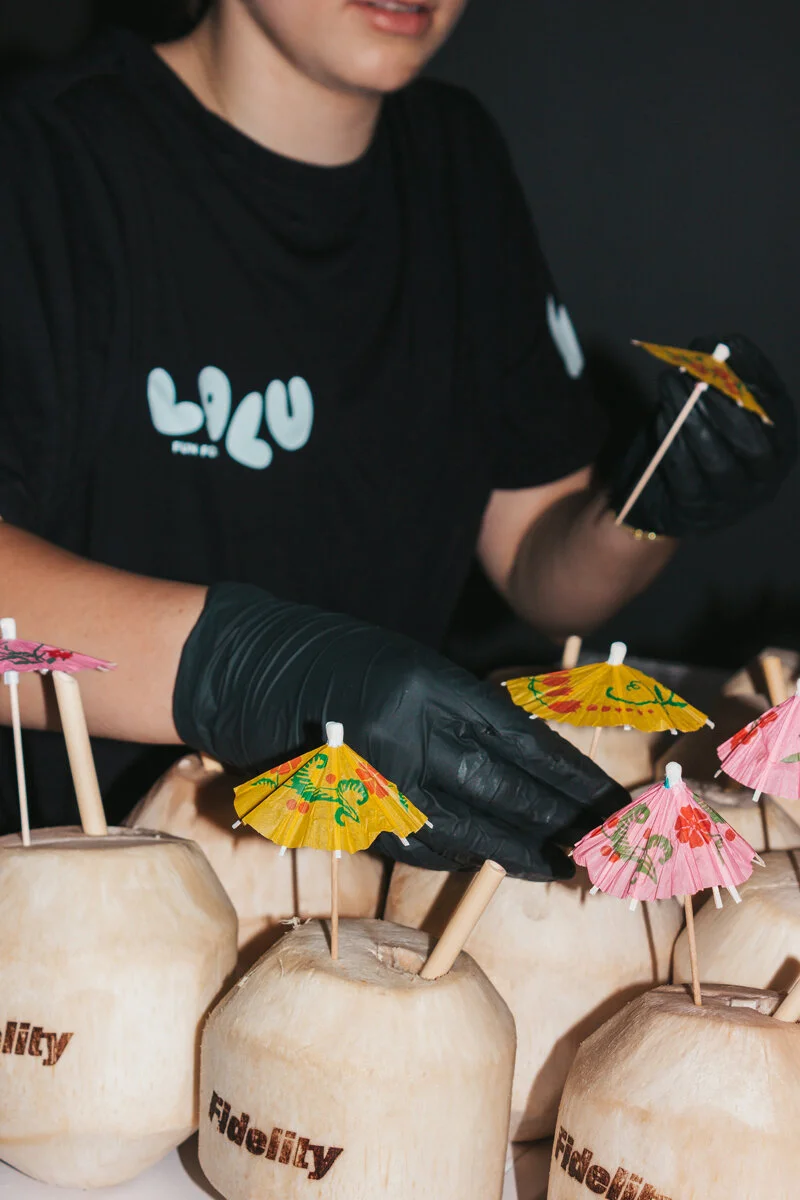
Every activation needs a reason for people to stop, stay, and share, and food does all three at once. It's multi-sensory, it's universal - everyone at the event eats - and every surface is brandable. Custom cups, packaging, signage, and the cart itself become moving billboards across the room. A striking serve like our Luv Coco branded coconuts gets photographed without anyone being asked, which turns guests into your distribution channel.
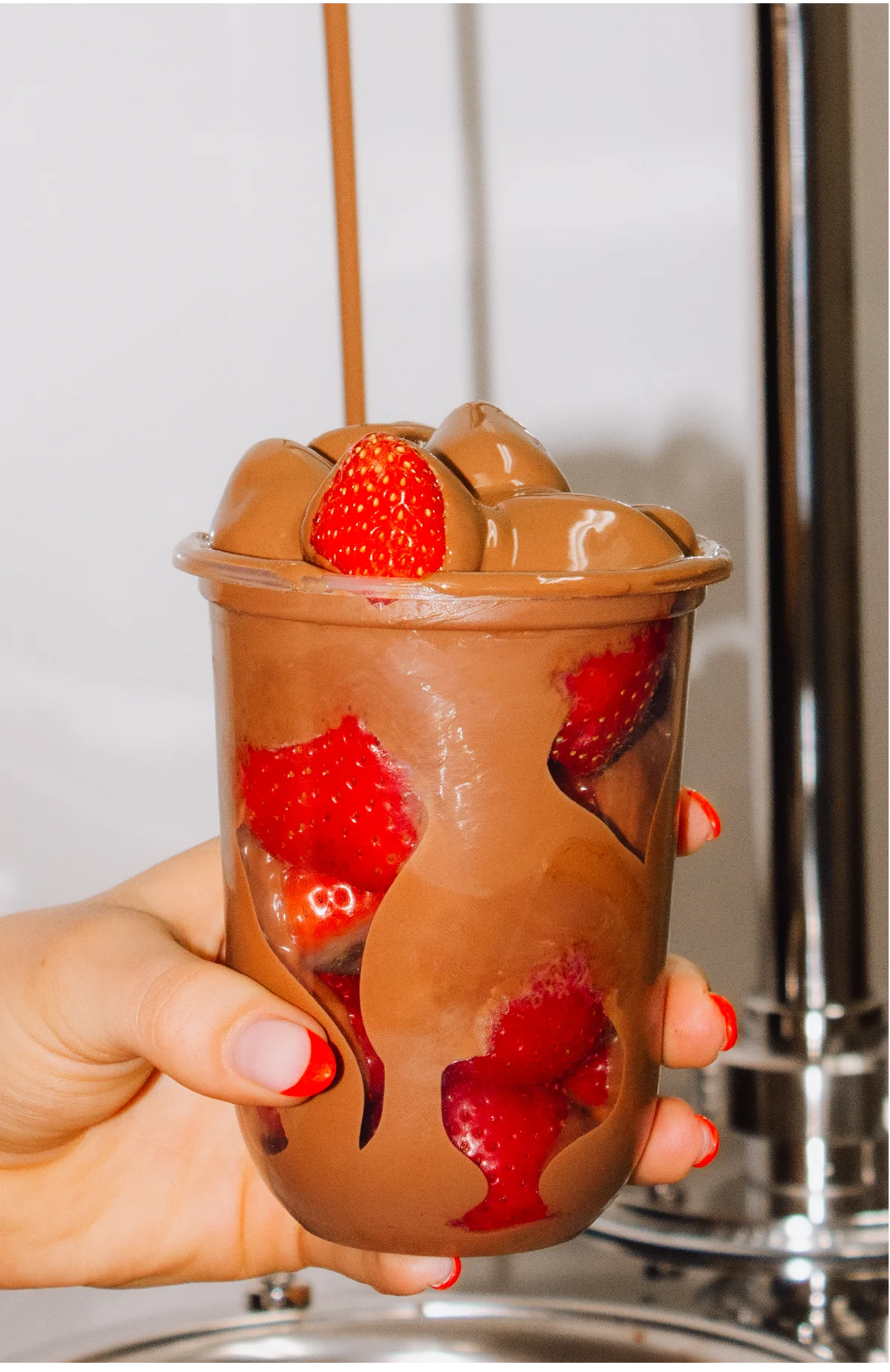
Food also creates a natural queue, and a queue is dwell time. While someone waits for a Belgian Chocoberry chocolate-dipped strawberry or a smoothie, your staff has a captive minute to talk, hand over a sample, or scan a QR code. That's the difference between an ad people scroll past and a moment they choose to stand in line for. You can see the full lineup on our product menu, from gelato carts to mini donuts to grilled cheese.
What are examples of brand activations in Toronto?
The clearest way to understand the formats is to see what they look like in practice. Each of these is real work Lalu has produced across Toronto and the GTA, and each maps to one of the four formats above.
- CNE festival residency: a multi-day branded food program at one of the country's highest-traffic event audiences, where Lalu has ranked among the top-grossing food vendors.
- Sephora retail activation: a fully branded gelato cart with cart, cups, and flavors all styled to the campaign.
- NYX Cosmetics pop-up tour: custom drinks served from a branded station as the campaign toured across stops.
- Fidelity Investments lobby takeover: a branded smoothie and coconut bar that served 1,000 employees in a single day in their downtown Toronto office lobby.
- Live Nation Budweiser Stage: branded food and beverage service inside a major Toronto live-music venue.
How do you measure brand activation ROI?
An activation is measurable if you design the metrics in before the event, not after. The strongest signals are throughput - how many people you served - plus social reach from a built-in photo moment, and direct data capture. A lobby program that serves 1,000 employees in a day, like our Fidelity build, gives you a hard impression count you can stand behind.
- Sample count: how many branded serves went out, the cleanest proxy for trials.
- Data capture: QR codes, sign-ups, or a sampling-for-email trade at the station.
- Social reach: tagged posts from a styled photo moment, multiplying impressions with no extra ad spend.
- Dwell time: how long the average guest stayed in the experience.
- Sales lift: foot traffic or conversion at a retail location during and after the activation.
How much does a brand activation cost in Toronto?
At Lalu, brand activations start at a $1,500 minimum spend, which covers the station, product, two to three uniformed staff, setup, custom branding, and teardown - typically a compact branded station for 100-200 guests. Most single-station bookings land between $1,500 and $3,000. Large multi-activation programs with custom fabrication scale to $50,000 and up. Our corporate events service handles the bigger end of that range.
Lead time matters as much as budget. A turnkey single-station booking needs 3-4 weeks; a larger custom build or a multi-day festival residency needs 6-8 weeks. Every activation is delivered by our own team, food-safety certified and fully insured, with a Certificate of Insurance available to your venue on request. Our PR and brand activation service and our experiential marketing service both cover this end to end.
If you want the production side without a full program, the rentals page lists the carts, bars, and stations available as standalone branded units. Brands across the GTA - from Markham and Richmond Hill to Oakville and Etobicoke - book Lalu through our Toronto event catering and custom food experiences page, which is the best place to start a brief for any activation in the city.
Brand activation FAQ
What's the difference between a brand activation and experiential marketing?
Experiential marketing is the overall strategy of reaching people through live experiences. A brand activation is one campaign inside that strategy - the specific pop-up, lobby takeover, or festival residency where it actually happens. The strategy is the plan; the activation is the event on the day.
How much does a brand activation cost in Toronto?
At Lalu, activations start at a $1,500 minimum spend, which covers the station, product, staff, setup, custom branding, and teardown for roughly 100-200 guests. Most single-station bookings run $1,500 to $3,000, and large multi-activation programs with custom fabrication scale to $50,000 and up.
How far in advance should I book a brand activation?
Book a turnkey single-station activation 3-4 weeks out. Larger custom builds and multi-day festival residencies need 6-8 weeks. Rush timelines are handled case-by-case depending on availability, so it's worth reaching out even on a short runway.
Do you handle staffing, insurance, and setup?
Yes - every booking is turnkey. Lalu is food-safety certified and fully insured, provides a Certificate of Insurance to any venue on request, and delivers each activation with our own uniformed team of usually two to three staff, including setup and teardown.
Which areas of the GTA do you serve?
We're based in Toronto and serve the whole GTA - Mississauga, Vaughan, Markham, North York, Scarborough, Etobicoke, Brampton, Richmond Hill, Oakville, East York, and downtown Toronto. Travel beyond the GTA is possible on request.
Ready to plan one? Send the brand, the audience, and the date, and we'll come back the same business day with a concept, a product lineup, and honest pricing.